

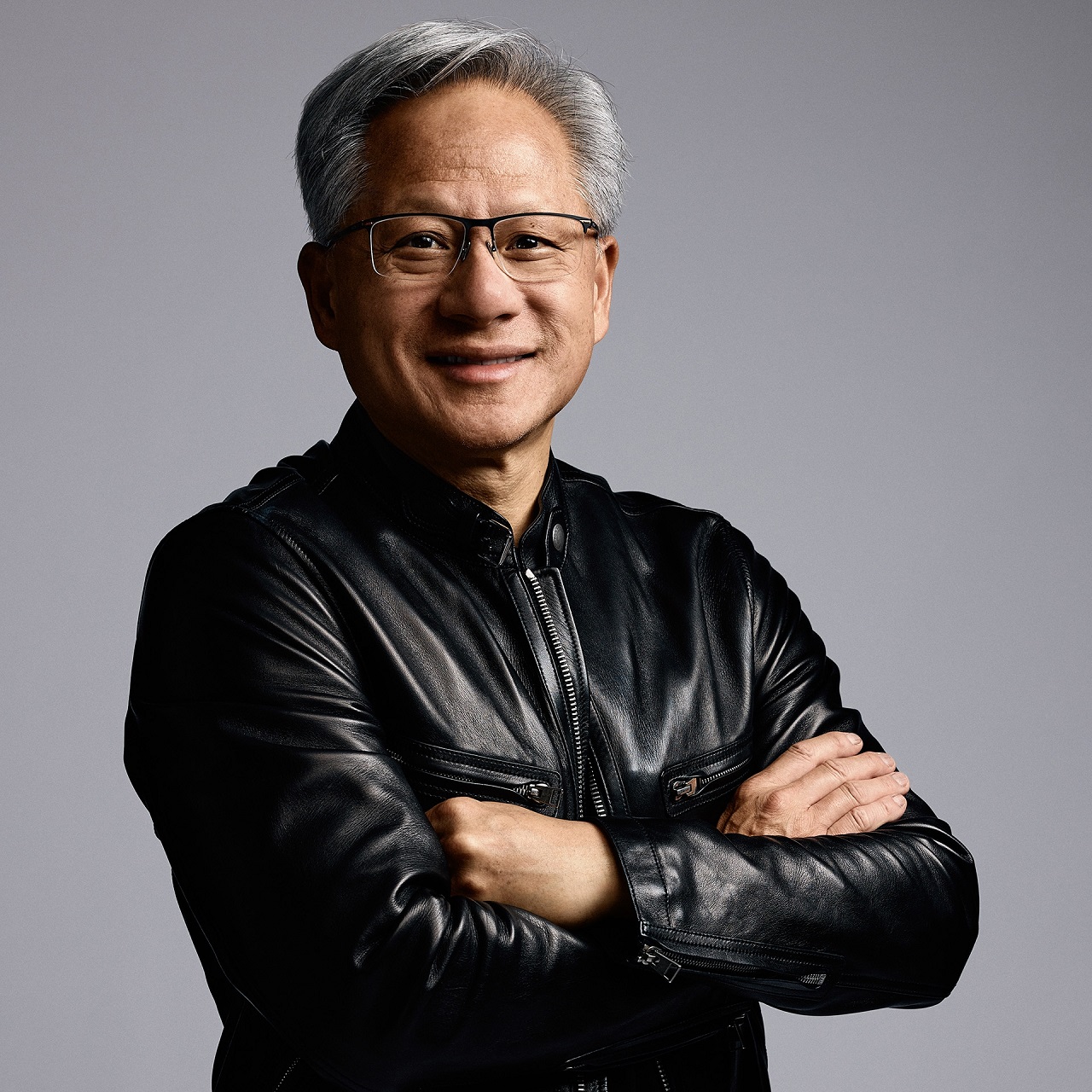
The controversy surrounding Nvidia and Singapore-based Megaspeed is not a simple tale of a CEO’s personal indiscretion. It is a story about how a billion-dollar chip trail, a suspected foreign intelligence asset, and a single email from Nvidia’s general counsel converged to halt a sensitive U.S. export-control investigation—and why the fallout now threatens to reshape Nvidia’s relationship with Washington.
How the Relationship Opened Doors
Megaspeed did not emerge from nowhere. It began as 7Road International, the overseas arm of a Chinese gaming company, before renaming itself in March 2023—just months after the U.S. tightened export controls on advanced chips to China. At the center of its transformation was Alice Huang, also known as Huang Le, who became managing director at the rename and whose reported personal relationship with Jensen Huang is now the subject of an Nvidia board investigation.
The corporate timeline is striking for its speed. Megaspeed was officially appointed an Nvidia Cloud Partner in November 2023—just four days after ownership was transferred to a new Singaporean entity. From there, its purchasing exploded. Its Malaysian affiliate, Speedmatrix, acquired at least $4.8 billion worth of AI equipment containing Nvidia technology between June 2024 and February 2026, transforming a company with roughly $6 million in cash at the end of 2023 into one of Nvidia’s largest buyers in Southeast Asia. Much of that buying occurred in the six weeks before May 2025, when the U.S. began requiring licenses for AI chip exports to Southeast Asia.
Decoding Megaspeed
Megaspeed is a Singapore-registered AI cloud computing company, essentially a “neocloud” provider. Its business model is not to sell chips, but to purchase Nvidia GPU hardware, build data centers in Southeast Asia, and rent out computing power to external parties.
Its customers include Chinese tech giants such as Alibaba, and the reason it needs to acquire Nvidia chips in large quantities is precisely because this is the core asset for its rental business—without Nvidia’s high-performance GPUs, it would have no computing power to offer for rent.
From Gaming Company to AI Computing Lessor
Megaspeed was originally called 7Road International and has its roots in the Chinese gaming company 7Road. In March 2023, the company was renamed Megaspeed, and Alice Huang (Huang Le) joined as managing director. After the renaming, the company transformed into a cloud computing provider focused on AI, claiming to be an “Nvidia Cloud Partner” offering computing services covering Nvidia’s full line of GPU products, including the H100 and GB200 NVL72 systems.
Its scale expanded extremely rapidly. Trade records show that Megaspeed’s Malaysian affiliate Speedmatrix purchased at least $4.8 billion worth of advanced AI equipment containing Nvidia technology between June 2024 and February 2026. A company with only about $6 million in cash at the end of 2023 quickly became one of the largest Nvidia chip buyers in Southeast Asia.
Business Model: Renting Computing Power Instead of Selling Hardware
Megaspeed’s model is typical of “neocloud”: it purchases Nvidia GPU servers, deploys them in data centers in Southeast Asia (such as Malaysia and Indonesia), and then rents out computing power to customers in need. Customers do not need to purchase expensive chips themselves or build their own data centers; they only need to pay for access to Nvidia-level AI computing power.
The compliance sensitivity of this model lies in: U.S. export controls restrict the direct export of high-performance Nvidia chips to China, but renting computing power from data centers outside China is not the same as physically shipping chips into China. U.S. authorities suspect that Megaspeed may have helped Chinese companies bypass restrictions in this way, but Megaspeed denies this and claims that inspections by the U.S. Bureau of Industry and Security (BIS), the Malaysian Ministry of Investment, Trade and Industry, and Nvidia found no evidence of illegal transfers.
Who Are the Customers: Alibaba is a Key Client
Multiple reports indicate that Alibaba is Megaspeed’s largest customer. Alibaba’s subsidiaries lent money to Megaspeed in June 2024, and Alibaba has remained its main client since then. Megaspeed has also provided computing services to other Chinese companies, with data centers located in Southeast Asia. It is precisely this customer structure that has put Megaspeed under scrutiny by U.S. investigators—they are concerned that Chinese entities are using computing resources outside China to access advanced American AI technology.
Why Nvidia Chips Are Crucial: Without Chips, There Is No Business
Megaspeed’s entire business model is built on Nvidia GPUs. In the AI training and inference market, Nvidia’s H100 and GB200 are among the most sought-after computing hardware, and customers seeking computing power are essentially seeking access to Nvidia chips. If Megaspeed cannot obtain Nvidia chips, it cannot provide competitive AI computing services, and its business would lose its foundation.
This also explains why its “Nvidia Cloud Partner” status is so important—it means formal access to Nvidia’s product ecosystem and supply chain. However, it was precisely this close relationship with Nvidia, combined with Alice Huang’s alleged personal relationship with Jensen Huang, that made Megaspeed the focal point of this controversy. U.S. investigators are examining whether Megaspeed used its relationship with Nvidia to obtain large quantities of chips and whether some of those chips ultimately flowed into China in violation of regulations. Megaspeed denies all allegations, and the investigation is still ongoing.
Whether Jensen Huang personally “created” opportunities for Megaspeed is not established in the public record. What is documented is that Megaspeed operated within Nvidia’s official partner ecosystem, and that its explosive growth aligned precisely with the window before export controls tightened. Nvidia has said it placed Megaspeed on an internal block list in June 2025, barring further sales.
The Intervention That Stopped a Probe
The more consequential story is what happened after U.S. investigators began looking. Commerce Department agents had been investigating Megaspeed for months, suspecting the company was helping Chinese firms access restricted Nvidia chips through data centers in Southeast Asia. Then, in August 2025, Nvidia general counsel Tim Teter emailed the investigators. He stated that Jeffrey Kessler, the Commerce Department under secretary overseeing export controls, had given Nvidia permission to reach out about the case.
The agents were alarmed. Some viewed Kessler’s interaction with Nvidia as violating government procedure and potentially tainting the investigation. The case was soon transferred to the Justice Department, which is now conducting a criminal inquiry into Megaspeed. Kessler has denied ordering anyone to share information, and Nvidia maintains its outreach was routine cooperation.
But the optics are damaging. Nvidia had, in effect, contacted the very agency investigating its customer, invoked the name of a senior Trump-appointed official, and shortly afterward the investigation was moved. Even if no law was broken, the episode raises a fundamental question: did Nvidia use its political access to shape an active enforcement matter?
How Big Is the Fallout?
The fallout operates on three levels, each more serious than the last.
Personal and reputational. Jensen Huang has admitted to an affair with Alice Huang, whom U.S. intelligence believes was a Chinese intelligence asset. Nvidia’s board has launched an independent investigation into whether Huang was targeted by foreign intelligence. Reports suggest the board has prepared for the possibility of removing him. For a CEO whose public identity is inseparable from Nvidia’s brand, this is an existential governance crisis.
Regulatory and political. The Commerce Department has delayed placing Megaspeed on the Entity List, the U.S. export blacklist, despite pushback from the State, Energy, Treasury, and Defense departments. Treasury Secretary Scott Bessent reportedly confronted Commerce Secretary Howard Lutnick in the Situation Room over the reluctance to label Megaspeed a national security threat. Nvidia’s CEO has been called to a closed-door congressional briefing on November 18. Lawmakers want to know whether Huang’s past assurances that chips were not diverted to China still hold.
Financial and strategic. Nvidia’s stock fell 5% on the day Huang’s affair became public. More telling is what Nvidia stopped disclosing. In the quarter ending July 2025, Singapore accounted for $10.2 billion, or 22% of Nvidia’s revenue. The following quarter, Singapore vanished from Nvidia’s geographic revenue breakdown entirely, as the company switched from billing address to headquarters location . Investors can no longer see the scale of Nvidia’s exposure to the very market now under scrutiny.
What the Future Holds for Nvidia
The immediate financial risk is manageable. Analysts expect Nvidia’s revenue to climb from $216 billion in fiscal 2026 to $412 billion this year and $692 billion the next. Even a worst-case loss of $30 billion in Southeast Asian revenue would be absorbed. At roughly 15 times forward earnings—about half its three-year average—the stock already prices in significant bad news.
The structural risk is harder to quantify. Nvidia’s entire China strategy has rested on the argument that its chips are essential to American AI leadership and that export controls ultimately hurt the U.S. more than China. That argument depends on Nvidia being a credible partner in enforcement. If Congress or the Justice Department concludes that Nvidia interfered with an active investigation, that credibility erodes. Export licenses, already a political football, become harder to secure. The Justice Department’s criminal inquiry into Megaspeed could also produce discovery that exposes Nvidia’s internal knowledge of its customer’s ultimate beneficiaries.
The board’s investigation into Huang will determine his fate, but it will not resolve the larger question. Nvidia’s problem is not merely whether its CEO had an affair with a suspected spy. It is whether the company, in its drive to sell chips wherever demand exists, built relationships and took actions that undermined the very export-control regime it publicly claims to support. The Megaspeed affair has made that question impossible to ignore.
