

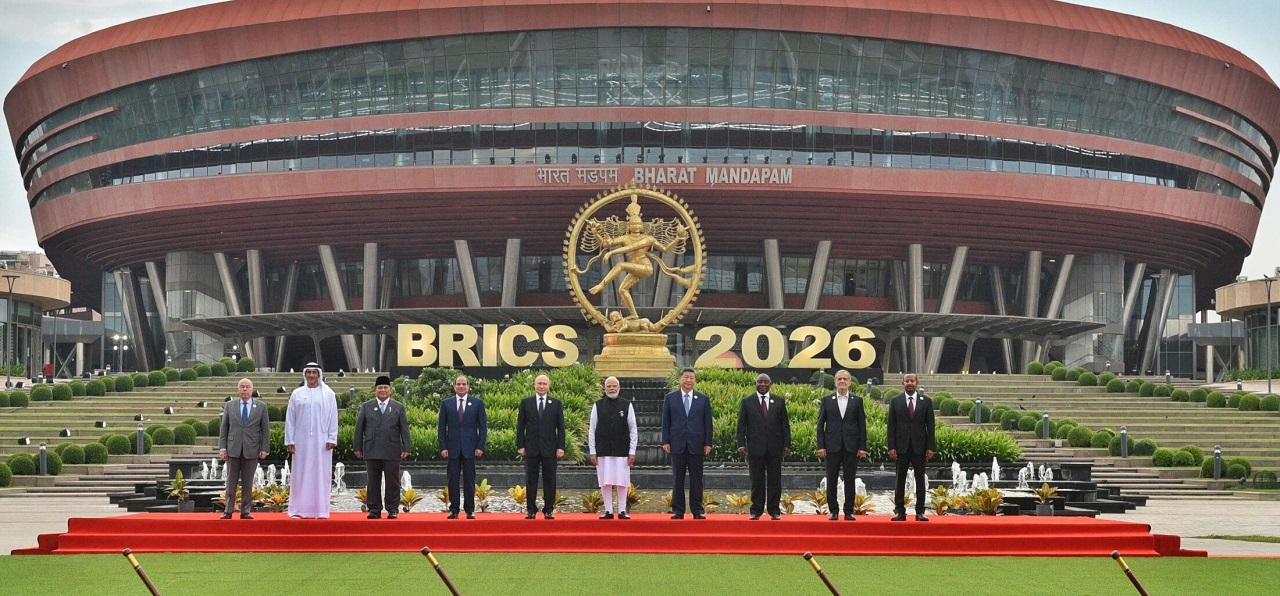
The BRICS 2026 New Delhi Declaration has placed telecommunications at the heart of its vision for peace and economic development, and in doing so, it has reaffirmed what Indian operators have argued for years: connectivity is core national infrastructure. This is not a rhetorical flourish. It is a strategic recognition that digital networks are as fundamental to a nation’s security and prosperity as roads, ports, and power grids.
The declaration’s call for interoperable ICT security standards mirrors the trusted-sources approach that India’s telecom industry has already embraced. Indian operators have spent the past several years building supply chains around verified, trustworthy vendors, particularly in the roll-out of 5G and the evolution toward 6G.
By pushing for globally interoperable security standards, the BRICS framework gives multilateral legitimacy to a principle that India has already put into practice. This alignment reduces fragmentation and creates a shared baseline that benefits operators, governments, and citizens alike.

Equally significant is the declaration’s recognition of submarine cable infrastructure as critical to network resilience. Submarine cables carry the overwhelming majority of international data traffic, yet they have historically been treated as commercial assets rather than strategic ones.
The BRICS working group on cable requirements has already begun studying high-speed communication network feasibility, and the New Delhi Declaration elevates this work to a political priority. For Indian operators, this opens the door to greater route diversity, redundant capacity, and stronger cross-border infrastructure governance — all of which are essential for a nation that aspires to be a digital hub for the Global South.
On artificial intelligence, the declaration’s emphasis on global cooperation for safety and energy efficiency aligns squarely with the AI-native networks that Indian operators are already building. These networks use machine learning for intelligent operations, predictive maintenance, and dynamic energy optimisation. The declaration’s twin focus on trustworthy AI and energy efficiency validates the direction of travel: AI must be both safe and sustainable. Indian operators are not waiting for global standards to mature; they are already embedding these principles into live infrastructure.

Taken together, the New Delhi Declaration does something rare in international diplomacy. It moves beyond aspirational language and anchors telecommunications within a framework of national resilience, economic sovereignty, and multilateral cooperation. For India, this is a moment of strategic convergence. The priorities that Indian operators have championed domestically — trusted supply chains, resilient cable infrastructure, and responsible AI — are now reflected in a BRICS declaration that speaks for a significant share of the world’s population and economy.
The implication is clear. Connectivity can no longer be treated as a peripheral service or a purely private commercial matter. It is infrastructure in the fullest sense: foundational, strategic, and deserving of coordinated national and international attention. The BRICS 2026 New Delhi Declaration recognises this. India’s telecom industry has known it for years. The task now is to translate shared recognition into shared action — through interoperable standards, resilient cable networks, and AI systems that are both safe and efficient.
“The New Delhi Declaration’s framing of telecommunications as vital to peace and economic development reaffirms what Indian operators have long argued, that connectivity is core national infrastructure. Its call for interoperable ICT security standards mirrors the trusted-sources approach our industry has already embraced. The recognition of submarine cable infrastructure as critical to network resilience is equally welcome. On AI, global cooperation on safety and energy efficiency aligns with the AI-native networks operators are already building,” said, Lt. Gen. Dr. S.P. Kochhar, Director General, Cellular Operators Association of India (COAI).
“The New Delhi Declaration’s emphasis on reducing asymmetries in space capabilities among BRICS nations validates India’s push to build a globally competitive space economy from the ground up. The progress on the Remote Sensing Satellite Constellation and the BRICS Space Council reflects the kind of institutional cooperation that benefits emerging space powers like India, giving our satellite manufacturing and downstream data industry access to a much larger cooperative framework. The focus on space debris mitigation is timely too, as India’s own commercial launch cadence accelerates, sustainability of orbital assets has to be a shared priority, not an afterthought. This is exactly the kind of multilateral platform Indian space companies need as they scale globally,” commented, Lt. Gen. AK Bhatt (retd.), Director General, Indian Space Association.
