

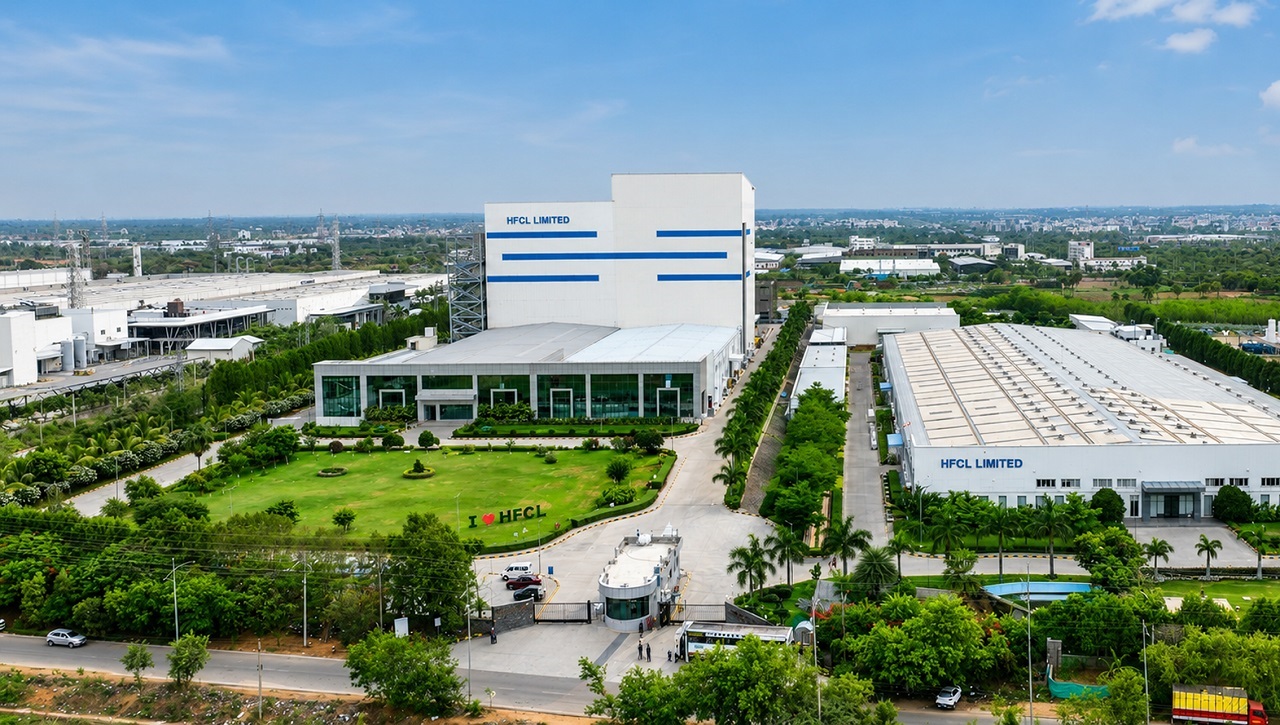
HFCL is Expanding Fiber Capacity While Cutting Carbon, Without Digging New Roads
As AI workloads, cloud computing, and data-intensive applications accelerate worldwide, the pressure on digital infrastructure is intensifying in ways that are not always visible. Beneath city streets, much of the world’s fiber runs through underground ducts laid decades ago. In many dense urban corridors, these ducts are already full. Expanding capacity using conventional methods often means road excavation, new ducting, long approval cycles, and higher environmental impact.
This is where sustainability in telecom infrastructure is being quietly redefined. Instead of treating sustainability as a downstream reporting metric, HFCL has approached it as an engineering and design challenge, one that focuses on material efficiency, lifecycle thinking, and the ability to extract more value from existing infrastructure.
The sustainability problem hidden underground
Traditional fiber expansion relies heavily on civil construction. Street excavations, duct replacement, and restoration can stretch project timelines by months, sometimes longer in congested cities. According to industry deployment benchmarks, civil works can cost over USD 100 per meter in urban environments, while also contributing significantly to embodied carbon emissions through concrete, asphalt, plastics, and transport activity.
For network owners and hyperscale operators, the environmental footprint of connectivity extends well beyond operational energy use. It includes emissions from raw materials, manufacturing, logistics, and construction, an issue increasingly highlighted by global policy and research bodies as a critical lever for greener network growth.
HFCL’s response has been to focus on fiber designs that unlock capacity from infrastructure operators already have, rather than forcing disruptive expansion.
Engineering sustainability into fiber design
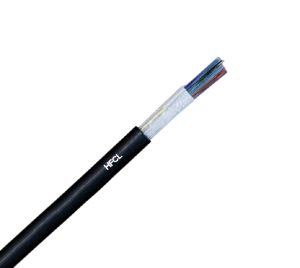
A central example of this approach is HFCL’s Intermittently Bonded Ribbon (IBR) microcable portfolio, where the design goal is to raise fiber density inside the duct an operator already owns.
The 864-fiber IBR microcable makes the case concretely. Its compact construction carries a 24 percent smaller diameter and 47.5 percent lower HDPE usage than conventional alternatives, translating into up to 46 percent lower carbon emissions. In deployment, this allowed 864 fibers to fit within existing microducts and doubled network capacity without any new infrastructure being built.
The sustainability logic is straightforward: less raw material per cable, a smaller and lighter shipment per kilometer of route, and, most consequentially, the avoided emissions of road excavation and duct replacement.
In dense urban environments, where street excavation and restoration can take months and disrupt communities, avoiding civil work becomes both an environmental and social benefit. Reduced construction activity means lower emissions, less waste, and fewer disruptions to everyday life.
Material efficiency at scale, not as a one-off
What makes HFCL’s approach distinctive is that this material efficiency is not confined to a single product. IBR ribbon constructions now span 144 fibers to 3,456 fibers, with the cables engineered to fit into smaller 20/25mm ducts than conventional ribbon designs of equivalent count.
The armored end of the portfolio shows the same discipline. HFCL’s single-jacket single-armor IBR cables, offered from 144 to 1,728 fibers, deliver diameter reductions of up to 24 percent and weight reductions ranging from 18 to 48 percent against competing armored IBR solutions. Lighter, slimmer cable means fewer shipments, smaller handholes and closures, and less material consumed across the system.
This ability to scale density without scaling material use allows operators to plan long-term capacity upgrades without repeated construction cycles. It also improves the economics of sustainability by aligning environmental benefits with cost efficiency.
Faster deployment, lower environmental load
Speed is often discussed as an operational advantage, but it also has a sustainability dimension. HFCL’s cable designs are engineered to simplify installation and reduce time spent in the field. In one microduct trial, 2,000 meters of cable were installed in 16 minutes, a jetting speed of 125 meters per minute. For armored and ribbon cables, simplified construction has reduced mid-span connection time by around 36 percent.
Faster installation translates into fewer truck rolls, lower fuel consumption, reduced manpower hours, and fewer repeat site visits. When multiplied across large-scale fiber rollouts, these operational efficiencies become meaningful contributors to emissions reduction.
Lifecycle thinking from factory to field
Sustainability in HFCL’s case is not confined to deployment alone. The company has highlighted ongoing lifecycle assessment work across key product categories, alongside initiatives at its manufacturing facilities aimed at lowering operational emissions.
Vertical integration plays an important role here. By managing material development and design in-house, HFCL can iterate faster, reduce rework, minimize scrap, and align performance, durability, and sustainability goals at the design stage rather than retrofitting them later.
This manufacturing-led efficiency supports consistency across product families, ensuring that sustainability outcomes are repeatable rather than anecdotal.
Recognition and relevance in a high-growth market
HFCL’s design approach has also received third-party validation. Its IBR portfolio has won multiple global awards, including the Lightwave Innovation Reviews, ISE Network Innovators’ Awards, and the Lightwave + BTR Innovation Reviews award. The timing is significant. Hyperscalers and large technology companies continue to expand AI and data center infrastructure rapidly. According to industry reporting, hyperscalers like Amazon, Microsoft, Google, Meta, and Oracle are expected to invest over USD 600 billion in data center infrastructure in 2026.
In this environment, solutions that deliver more capacity within the same physical footprint are not just operationally attractive; they are increasingly essential for meeting climate commitments tied to infrastructure expansion.
A practical model for greener network growth
HFCL‘s case demonstrates that sustainability in telecom infrastructure does not have to be an abstract goal or a parallel initiative. By embedding emissions reduction into core network planning, maximizing existing assets and minimizing new material and construction, sustainability becomes a practical outcome of better engineering.
Rather than building bigger networks, HFCL’s approach shows how building smarter networks can deliver the capacity required for AI, cloud and digital growth, while reducing environmental impact along the way.
