

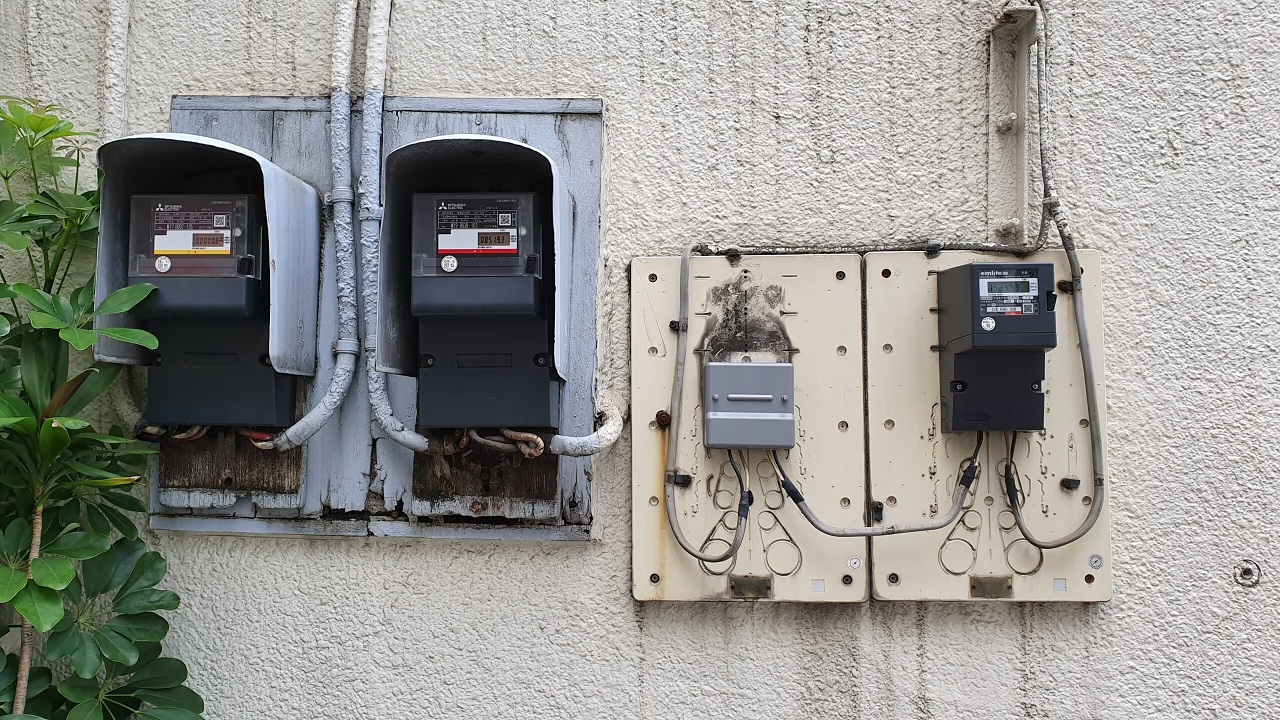
Somewhere in Ladakh, at an altitude where the air thins and the nearest cell tower may be a valley away, a smart electricity meter is quietly sending its reading to the grid. It is one of 60,000 in the Union Territory, and all of them talk to each other over a radio mesh designed by a company from Tampere, Finland.
That company is Wirepas, and its technology now sits inside more than 12 million smart electricity meters across India, making it the most widely deployed smart metering connectivity in the country. Wirepas recently published a state by state account of how those networks are holding up in four very different corners of India: Assam, Ladakh, Uttar Pradesh and Himachal Pradesh.
The timing matters. India’s Revamped Distribution Sector Scheme (RDSS) envisages 25 crore prepaid smart consumer meters nationwide, with the scheme period running to March 2028, as per the Ministry of Power’s reply in the Lok Sabha in July 2025. By the end of February 2026, 5.97 crore smart meters had been installed across all schemes, as per the Ministry’s statement in March 2026. The easy sites are largely done. What remains is the difficult ground: crowded urban meter rooms where signals bounce off concrete, and rural stretches where the next meter is a kilometre away.
Assam: where the numbers moved
If any state shows the scale smart metering can reach, it is Assam. As per the Ministry of Power’s statement to Parliament in March 2026, 64.45 lakh smart meters have been sanctioned for the state under RDSS, of which 50.36 lakh were installed by 28 February 2026. The Wirepas Certified platform runs inside approximately 4.6 million of Assam’s operational meters, a network that has kept communicating through the state’s monsoon floods and dense urban districts alike.
Ladakh: no towers, no problem
Ladakh is one of the highest inhabited regions on earth and remote in a way that is hard to grasp without standing there. The Ladakh Power Development Department’s smart metering programme covers 60,000 meters, and the Ministry of Power has told the Lok Sabha that 57,509 have been installed. Wirepas connectivity runs inside every meter in the programme. In a mesh network, each meter is both a transmitter and a receiver, so the meters form their own network and route readings home without depending on a central tower that may not exist.
Uttar Pradesh: the rural test
India’s most populous state is also one of its biggest energy consumers, and most of its people live in villages. Connecting those villages without laying new infrastructure is the challenge, and the answer in Uttar Pradesh has been a mesh network that needs no dedicated gateways and no SIM cards. Working with partner Polaris Smart Metering, Wirepas RF mesh technology now sits inside nearly one million smart meters in the state.
Himachal Pradesh: deep valleys, dense towns
Himachal Pradesh presents both extremes at once: long distances across Himalayan terrain and tight density inside its hill towns. As per the Ministry of Power’s data as on 31 December 2025, about 28 lakh consumer smart meters have been sanctioned for the state, with just over 7 lakhs installed. The Wirepas Certified platform runs inside 700,000 of those meters, delivering on its service level commitments in conditions the technology was designed for from the start.
“India is the toughest testbed imaginable for IoT. It is dense, diverse and dynamic. If your radio network performs there, it performs anywhere,” said Teppo Hemiä, CEO, Wirepas. “What these four states show is that the same technology holds up in a basement meter room in a crowded city and in a village at 11,000 feet. These meters sit quietly behind the daily lives of millions of people. Nobody thinks about them, which is exactly the point: operations, business and life remain uninterrupted. That is what being the quiet force behind resilient infrastructure means.”
Why it matters beyond the meters
Smart metering is central to the government’s push to make distribution utilities financially sustainable. As per the Ministry of Power, national Aggregate Technical and Commercial losses have fallen from 21.91 percent in FY21 to 15.04 percent in FY25. Every reading that reaches the utility on time is a unit that gets billed, and every meter that stays connected through a storm is a dispute that never happens.
The harder half
Wirepas is candid that the road ahead is steeper. Writing recently in Power Peak Digest, Ashish Sahay, Sales Director and Country Manager, India at Wirepas, noted that the remaining deployments bring two main challenges, high density and long distance, and that “the choice of technology needs to follow the site.” In practice, that means dense RF mesh in cities and dual communication or cellular backed connectivity where meters thin out. The Wirepas Certified platform supports both on a single plan, which simplifies rollout for utilities and AMI service providers at a time when qualified field engineers are in short supply.
Wirepas has worked in India since 2018 with an ecosystem of Indian meter manufacturers and AMI solution providers including Allied Engineering Works, Polaris Smart Metering, Capital Power Systems and HPL Electric & Power. The company’s India team is at the Distribution Utility Meet (DUM) in Jaipur on 27 and 28 October 2026 to share these learnings with distribution utilities across the country.
