
As the FIFA World Cup 2026 unfolds across 16 stadiums in the United States, Canada, and Mexico, a quiet technological revolution is taking place above the roaring crowds. While the world’s focus remains on the pitch, a Singapore-born innovation is ensuring that the tournament is the most connected in history.
MatSing’s distinctive spherical lens antennas are the unsung heroes, delivering seamless 5G connectivity to hundreds of thousands of fans, enabling them to share every goal, celebration, and wefie without a single dropped signal.
The Connectivity Challenge of a Mega-Event
Modern sports fans are no longer passive spectators; they are content creators. In a stadium packed with 80,000 people, each fan is simultaneously streaming live video, uploading 4K content, and using mobile apps for ticketing and concessions. This creates a massive data demand that traditional antennas simply cannot handle.
Standard antenna technology relies on reflection to focus signals in a single direction, making it inefficient for covering large, crowded spaces. MatSing’s technology works differently—it uses refraction, bending electromagnetic waves through a lens much like the human eye focuses light. This patented approach, developed using lightweight and low-loss dielectric metamaterials, allows a single spherical antenna to create multiple, highly precise, and isolated RF zones or sectors.
The Technology and Its Advantages
At the heart of MatSing’s success is its ability to minimize interference and maximize spectrum efficiency. By splitting a stadium’s seating bowl into distinct, focused beams, the antennas ensure that signals are targeted precisely where they are needed—whether that’s the upper decks, the pitch, or the surrounding tailgating zones.
The key advantages driving MatSing’s deployment at the World Cup include:
Superior Capacity and Performance: The antennas can deliver high-capacity 5G Ultra Wideband and multi-band coverage to tens of thousands of devices simultaneously, providing the same blazing-fast speeds as an empty stadium.
Seamless DAS Integration: They are designed to work in tandem with traditional Distributed Antenna Systems (DAS). For instance, at MetLife Stadium—host of the Final—Verizon uses MatSing’s “ball” antennas as an overhead macro layer to cover the broad upper bowls, while under-seat antennas handle the lower bowl proximity.
Aesthetics and Simplicity: A single MatSing lens antenna can replace dozens of traditional panel antennas. This reduces visual clutter, improves stadium aesthetics, and lowers installation and maintenance costs.
A Global Footprint Across World Cup Venues
MatSing’s technology is not a niche experiment; it has become the de facto standard for the tournament. Of the 16 host venues, 15 are relying on MatSing’s lens antennas to manage the data surge .
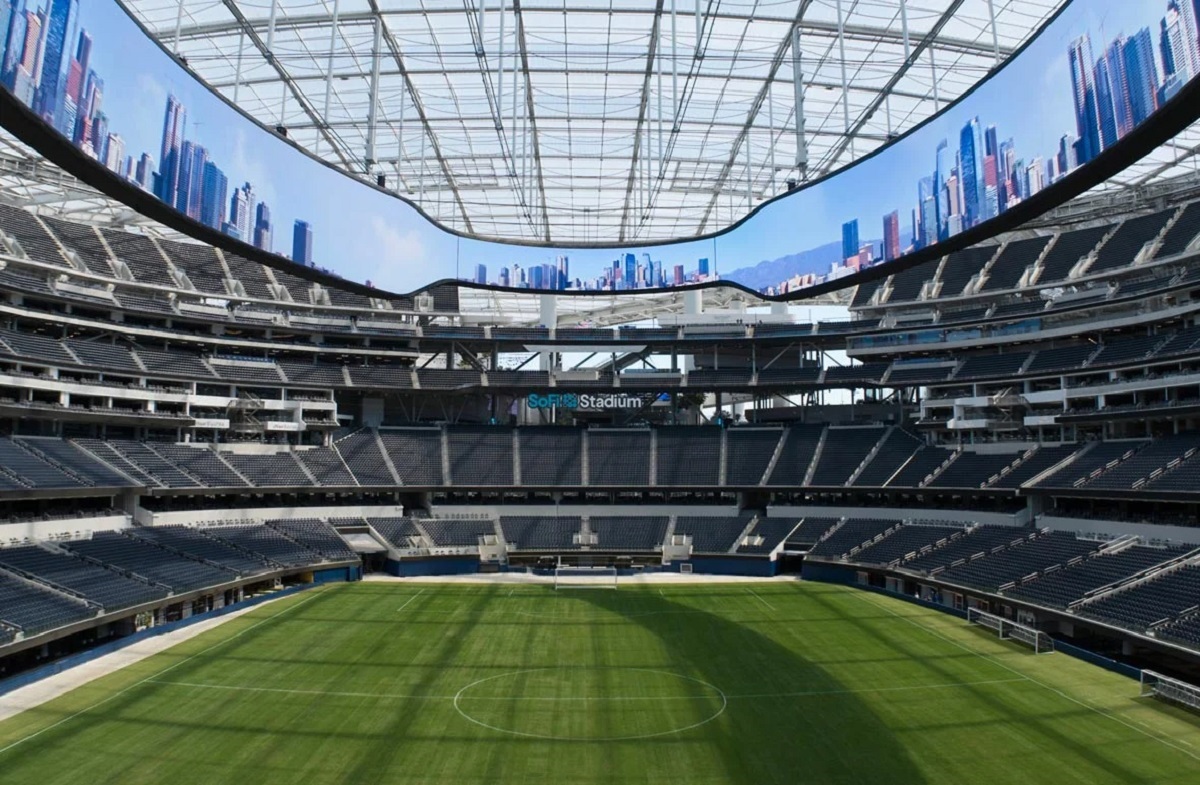
The elite lineup of venues using this technology reads like a who’s who of modern stadium architecture, including the iconic MetLife Stadium (New Jersey), SoFi Stadium (Los Angeles), AT&T Stadium (Dallas), Mercedes-Benz Stadium (Atlanta), Hard Rock Stadium (Miami), and BMO Field in Toronto. Even the legendary Estadio Azteca in Mexico City, which hosted the tournament’s opening match, is equipped with MatSing’s systems to deliver targeted coverage to fans in the upper sections.
The Future of MatSing Technology
The success at the World Cup is a powerful testament to the technology’s potential, and the company shows no signs of slowing down. MatSing has already proven its mettle at major events like the Coachella music festival and the Super Bowl.
Looking ahead, the company is expanding its portfolio to address broader connectivity needs. At MWC Barcelona in 2026, MatSing unveiled its latest innovation: a high-capacity WiFi 6E lens antenna. This new antenna brings the same centralized, high-performance approach to WiFi, supporting 16 independent beams and 4×4 MIMO to cover thousands of users from a single mount point.
From Singapore to the World
The story of MatSing’s rise is a point of pride for Singapore, where the company was founded in 2005 by Serguei Matitsine. All of its manufacturing, research, and design for its core products still take place in the industrial estate of Kaki Bukit.
The company’s name itself reflects this heritage—Mat stands for Materials, and Sing for Singapore. As the World Cup reaches its climax, MatSing’s technology is delivering a flawless fan experience, cementing its role as a key player in the future of connectivity.
Picture Courtesy: Sofi Stadium
