

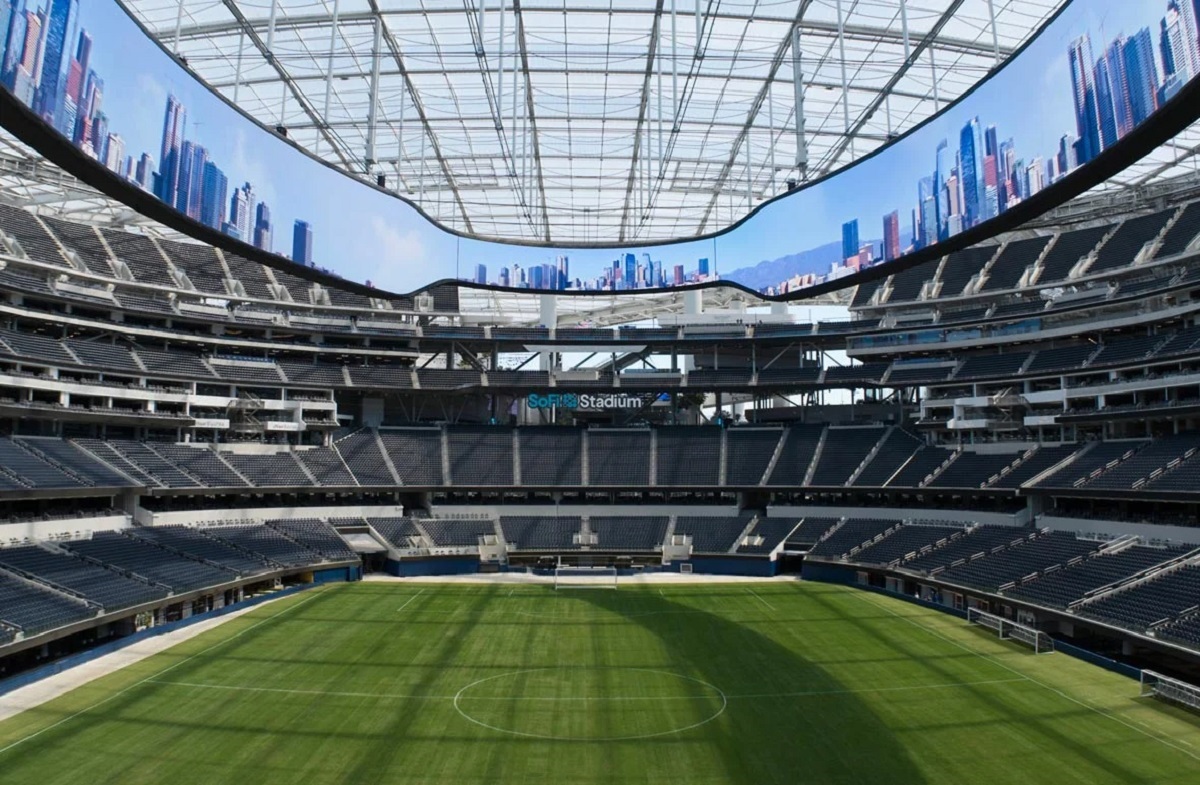
Throughout the entire FIFA US tournament, including the final match, Verizon’s network carried nearly 500 terabytes of data across all stadiums hosting FIFA matches. That’s the equivalent of streaming HD video for more than thirty years. At the final match, Verizon’s network carried a total of 29.2 TBs of data, with uplink volume surging nearly 70% during the half-time show.
As the Official Telecommunications Services Sponsor of the FIFA World Cup 26, Verizon kept fans connected throughout the tournament by upgrading stadium network capacity by 3-5 times across all U.S. venues to manage massive data surges.
Verizon also installed thousands of hidden antennas under seats, plus massive ball-shaped antennas aimed specifically at the upper tiers. Plus, its Private 5G network enabled the “Lenovo Referee View” body cameras, giving fans globally an immersive, real-time look from the referee’s on-field perspective.

Outside of all FIFA Stadiums, the operator also boosted connectivity to power transit hubs, FIFA Fan Festivals, and watch parties. To do this Verizon deployed nearly 140 small-cell projects and temporary cell sites ensuring seamless connectivity.
To support every FIFA broadcast from all 16 stadiums across three countries, Verizon built the dedicated digital highway powering the broadcast from camera lens to home screens. It added 80,000 miles of fiber- enough to wrap around the Earth more than 3.2 times- to deliver every camera feed from every match without lag or frame drops to FIFA’s International Broadcast Center where the feeds are aggregated before being distributed to billions of viewers worldwide.
The permanent network upgrades and expanded 5G coverage will remain in the host communities, providing faster daily connectivity for residents long after the final whistle.
“As the Official Telecommunications Services Sponsor of the FIFA World Cup 26, we set out to ensure every fan had a truly connected, unforgettable experience—and our network delivered flawlessly on that promise,” said Abraham Arencibia, Verizon’s Vice President of Technology and Product Development. “The network deployment, technological advancements and connectivity have no comparison to any other World Cup in history. Throughout the entire U.S. tournament, Verizon’s network carried nearly 500 terabytes of data across all host stadiums, which is the incredible equivalent of streaming HD video for more than thirty years. The massive capacity boosts we deployed to handle these historic surges will remain in these host communities, benefiting residents and local infrastructure for years to come.”
Data Usage in the US During the FIFA World Cup 2026
The FIFA World Cup 2026 has not only shattered viewership records but has also redefined the scale of mobile data consumption at major sporting events. As the tournament unfolded across 16 stadiums in the United States, the nation witnessed unprecedented digital engagement, with fans generating massive data traffic at venues and public viewing hubs.
From Los Angeles to New York, the hunger for connectivity was insatiable, and at the heart of this digital ecosystem was Verizon, the tournament’s Official Telecommunication Services Sponsor, ensuring a seamless experience for millions.
The Scale of Data Consumption
The data demand during the World Cup was staggering. In-stadium spectators were expected to consume over 50 terabytes of data per match within a single venue, equivalent to streaming high-definition video for more than three years.
This consumption was driven by modern fan behaviour: live streaming highlights, checking real-time player statistics, using mobile payments for concessions, and instantly sharing moments on social media. The tournament did not disappoint, with the event becoming the most digitally viewed in U.S. history, generating over 17.2 billion content views on digital and social platforms.
Key hotspots of data usage included major stadiums and iconic public viewing areas. The Los Angeles Stadium saw the United States’ opening match draw a peak television audience of 27.5 million viewers, while the host nation match in Atlanta saw significant mobile traffic. Outside the stadiums, public viewing hubs like Times Square in New York were inundated with fans streaming the games on their devices, creating massive data traffic in concentrated areas.
Verizon’s Critical Role
To handle such extreme demand, Verizon executed a comprehensive network upgrade strategy across all host venues. The company increased 5G capacity by an estimated three to five times at every stadium through the deployment of additional spectrum. This was bolstered by the installation of thousands of under-seat antennas and massive ball-shaped antennas to provide targeted coverage, especially for fans in the higher sections.
Beyond the stadium walls, Verizon extended its reach into surrounding communities. The company deployed nearly 140 small cells and temporary cell sites to ensure seamless connectivity in transport hubs, fan festivals, and public viewing areas. This infrastructure was crucial for places like Times Square and other large-scale watch parties, ensuring that even during peak congestion, fans could share their experiences without interruption.
Innovation Behind the Scenes
The connectivity was powered by more than just traditional macro coverage. Verizon deployed Private 5G networks within stadiums to provide dedicated bandwidth and ultra-low latency for critical tournament operations, including referee-mounted cameras that offered unique on-field perspectives.
Additionally, 5G Fixed Wireless Access (FWA) allowed for rapid connectivity at temporary installations, while network slicing prioritized performance for essential services, ensuring that public safety communications and broadcast feeds remained stable even during data surges.
Lasting Legacy
The infrastructure upgrades implemented by Verizon are expected to leave a lasting “digital legacy” for host communities, enhancing long-term access to high-speed connectivity for residents and businesses long after the tournament ends.
The FIFA World Cup 2026 has thus not only been a triumph of sport but also a showcase of how advanced telecommunications can support the immense data appetite of a digitally connected global audience.
