
Télécoms Sans Frontières has established a Global Xpress connection and IsatPhone 2 humanitarian calling operations to aid emergency relief efforts in Madagascar.
When Cyclone Batsirai made landfall on the east coast of Madagascar on 5 February, it brought with it wind gusts of 235 km/h (146mph) and high waves that have claimed the lives of 121 people, left 50,000 displaced and more than 120,000,000 affected.
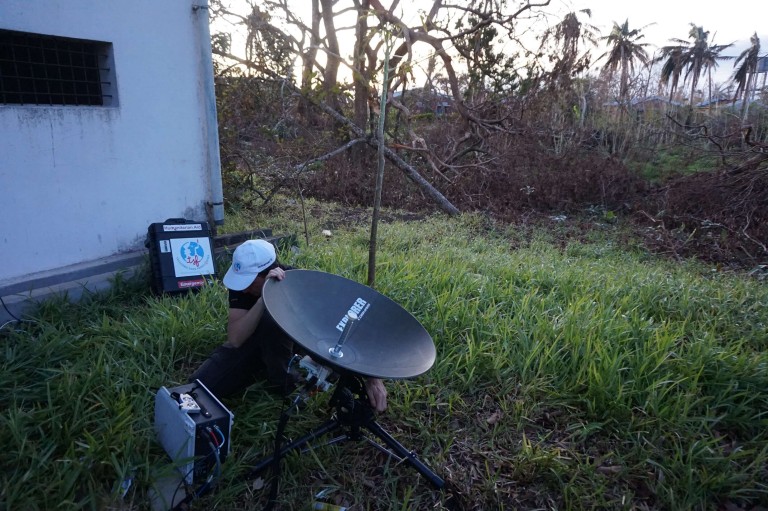
Following contact with Madagascan emergency response organisations, a team from Inmarsat-sponsored emergency telecoms agency, Télécoms Sans Frontières (TSF), arrived in the capital Antananarivo just two days later to provide vital emergency satellite connectivity to coordinate relief efforts.
“Our emergency telecommunication equipment will contribute to a joint and tailored response to the communication problems caused by the cyclone and thus support the humanitarian assistance for the communities living in the affected areas,” said Florent Bervas, Head of Mission for TSF in Madagascar, explains.
TSF has since established a high-speed broadband Global Xpress connection which is being used by several humanitarian organisations active in the affected area such as Doctors Without Borders (MSF), Médecins du Monde (MDM), UNICEF or the International Federation of Red Cross and Red Crescent Societies (IFRC).
Humanitarian calling
Florent continued: “As a first step, we contributed to connect the World Food Program’s (WFP) office, in order to facilitate the coordination of their relief operations. In parallel, other TSF experts joined the United Nations Disaster Assessment and Coordination (UNDAC) teams to provide telecom support and connectivity at their coordination centre.”
In addition, a team deployed to the town of Mananjary, one of the most affected areas, to set up the first humanitarian calling operations for nearly 3,000 victims of the cyclone living in eight temporary shelters, so that they can contact their relatives and loved ones via our IsatPhone 2 satellite phones.
In Mananjary, nine out of ten houses have been impacted, its hospital is no longer operational and another five health centres have been destroyed.
In coordination with the local authorities, the national disaster management agency (BNGRC), UNDAC and the other humanitarian organisations on the ground, TSF will be continuing its support to the humanitarian coordination and the people affected by the cyclone.