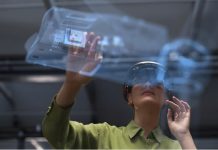

Teachers view new technological tools as a great opportunity to make digital teaching even more engaging and effective for distance and classroom learning.
This has been revealed by a Censis survey sent out to the first 5 thousand to sign up for the free “New Digital Teachers – Integrated teaching for open schools” course run by WeSchool as part of the Operazione Risorgimento Digitale project, in line with the TIM – Ministry of Education three-year memorandum of understanding aimed at speeding up the digitisation of Italian schools.

A transformation that, with the pandemic, has speeded up considerably, involving thousands of teachers and students in making the move from distance teaching to integrated digital teaching.
More specifically, the course has helped teachers in the application of the “Guidelines for integrated digital teaching”, issued by the Ministry of Education to enrich teaching through digital technologies and new teaching methods, which can be applied both in the classroom and from a remote position.
The Censis survey gathered the opinions of the secondary and upper school teachers who completed the various course modules on the difficulties encountered in distance teaching and the digital skills they realised they need.
The clearest element that emerged from the survey regards the perception of the teaching methods used: 92.1% of course attendees are in favour and believe that new digital technologies can make face-to-face lessons more effective and engaging. The awareness that integrated digital teaching may be more effective than traditional methods now appears to be consolidated. 86.7% of teachers believe that although the onset of the pandemic “shocked” the teaching system, it did successfully speed up its digitisation. There is, however, a very strong desire to reach a “new normal”: face-to-face teaching is irreplaceable, although the respondents are basically unanimous in agreeing on the need to integrate it with digital tools (89.4%). This is an important realisation, which sees teachers involved by an evolution of their digital skills, applying them in the relationship with students and innovative teaching methods.
“TIM has always supported the school and at a time like this we had no doubt about stepping up to help teachers and accompany them towards the digital evolution of the educational system”, declares Andrea Laudadio, Head of TIM Academy & Development. “With Operazione Risorgimento Digitale we seek to help construct the school of tomorrow, taking a structured, methodological approach with tailored training courses. A new school that integrates digital technologies into the learning processes: it is a great opportunity for the whole system because it regards the future of our younger generation”.
“The survey confirms that the return to the classroom will not find the same Italian school as before the health emergency”, declares Marco De Rossi, founder of WeSchool. “Technology changes the way we behave and we cannot unlearn. What teachers want, and it will take a major renewal of teaching methods to achieve this, is to return to a classroom increased and enhanced by the digital dimension, just as is the case in the world of work”.
In the near future, technologies are set to play a crucial role, particularly in education. The results of the survey are also confirmed in the 54th “Report on the country’s social situation” prepared again by Censis through consulting with headteachers: 97.5% of those interviewed, in fact, are unanimous in declaring that classroom teaching can never be replaced, but the spread of digital tools is an opportunity not to be missed, to be cultivated and included in teaching and new training processes.