
The mining industry faces complex challenges, such as climate change, skilled workforce shortage, accident risks, geopolitics, trade wars, and technological gaps. Mining companies must abide by environmental laws, maintain sustainable operations, and ensure ethical mining of natural resources.
These challenges have been ongoing for many years, compromising the quality of work, workers’ safety, and expected output. Hence, the mining industry continuously finds ways to address them. Fortunately, technological advances in mining can help improve productivity and safety in mining sites. Learn more about digital transformation in the mining industry below.

Embracing Mining Drones
Embracing drone technology is a great way to help mining companies start their digital transformation journey. This technology helps boost mining operations and revenues.
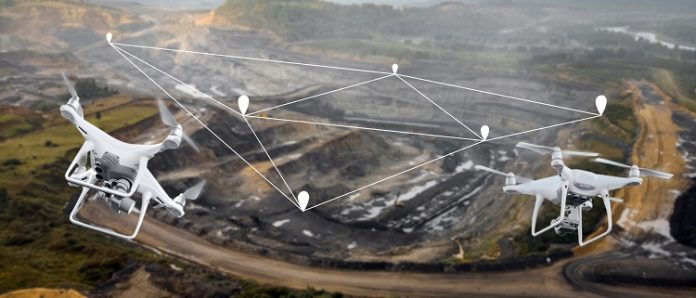
Drones are a must-have for the mining industry. These smart flying devices with camera and computing capabilities help companies save time and money performing vital mining operations.
Top mining companies worldwide include drones in their operations. Drones play a critical role in all mining aspects, such as resource and geo explorations, drilling, blasting, stockpile management, and reclamation.
Drones can perform dam site surveys, preventing leaks and untoward incidents via data analytics. Operators use them to track and record all onsite events quickly by analyzing underground and aerial images. These images provide accurate data for reporting.
Using Automated Ore Carriers And Trucks
Automated technology, laser scanners, and radar power modern ore carriers, eliminating the need to deploy humans in dangerous areas of mining sites. With automation programming, smart carriers and movers can cover a vast area 24/7, tremendously increasing productivity.
Self-driving trucks or driverless trucks rely on advanced memory and computing power. Navigation is possible through light detection and ranging (lidar) and radar devices. Therefore, self-driving trucks can sense objects and obstacles, obtaining an accurate picture of the mining site with high-precision GPS.
The GPS navigation data transmits into the control center’s computer, replacing the driver’s job. If a moving vehicle approaches the self-driving truck, the system can sense possible collisions by calculating the path, serving as its traffic management control.
The truck’s navigation system chooses the best route and commands the carrier to a particular shovel. The loaded carrier proceeds to the dumping area, recording each dump location to avoid dropping two loads into a single pile.
Adopting Drilling And Blasting Technologies
Drilling and blasting are critical parts of early-phase mining projects. Digital transformation of drilling and blasting involves adopting digital and automation solutions, improving productivity and profit margins.
Large-sized rocks usually block the material flow into a draw point. They’re too big to pass through the underground primary crusher’s jaws. Hence, loaders and rock breakers must deal with them. Traditionally, mining crews need to access the blasting site to wire up explosives to handle large rocks (secondary break activities), posing significant safety risks.
Mining companies must adopt blasting technologies for targeted operations, preventing accidents and substantial environmental damage. Blasting is a mining activity that moves enormous amounts of waste or overburden in surface mining operations. Surface mining methods include open-pit mining, such as strip mining, dredging, quarrying, hydraulic mining, and contour mining, generating large rock fragments.
With advances in blasting methods, mining sites can attain better fragment size control and promote precise rock movement, reducing overbreak removal and downstream processing costs. A good example includes using a secondary break drill and blast system to remove workers’ secondary break activities.
Integrating AI And Mining Robotics
Miners can use artificial intelligence (AI) to analyze data from machine interconnection and smart sensors. With this technology, mining sites can enhance operational efficiency and safety. And one of the latest innovations is AI-powered mining robotics, which is essential in communication and overall site productivity and safety.
Mining robots help in drilling and excavation. They can detect leaks and dangerous gases and haul rocks in and out of mining areas. Moreover, autonomous machines or robots protect workers when exploring abandoned mines and other unsafe mining sites. Therefore, replacing humans with an automated system lowers workplace safety implications.
Artificial intelligence powers mining robotics. Because of AI technology, mining robots can generate real-time insights to improve mining operations. AI-powered robots can discover exploration targets and mineral beds with superior accuracy. They can analyze terrains and the environment, creating more accurate site predictions.
Conclusion
Accelerating digital transformation in the mining industry involves combining technologies powered by data analytics, smart sensors, automation, etc. Mining drones, robotic drills, blasting technologies, self-driving ore carriers, and AI robots are just a few technologies that can help improve productivity and safety in mining operations. If you’re a mining business owner and manager, consider adopting these technologies to kickstart your digital transformation journey today.